
Bronze Street Review
7 October 2026Where precision meets personality, music becomes art.
Pilani Bubu keeps her word in Caged Heart. Not encouragement. Testimony.
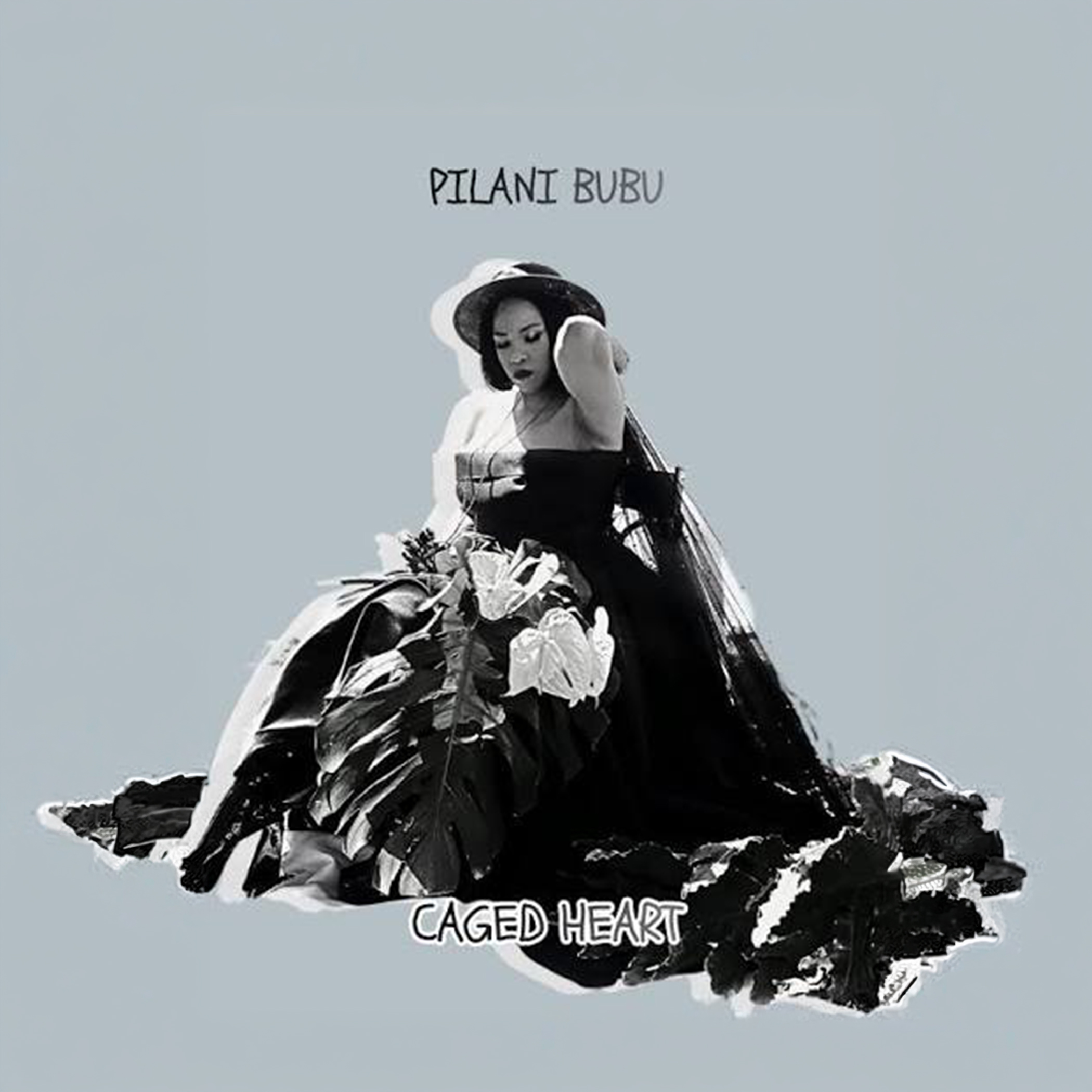
Is this the life you'd die for?
It's an uncomfortable question to ask a stranger.
Pilani Bubu asks it of anyone who will listen.
The song she asks it with began as a poem she wrote to herself in 2014.
She says it took twelve years to realise she had kept the promise she made in it.
Most encouragement asks to be believed.
This one arrives with a date on it.
So I listened differently.
Not for whether Caged Heart could encourage me.
For whether it could carry what she says it carries.
Where I'm standing
I should tell you how I know her.
Not well.
On a Friday in August 2016, in Nairobi, I nearly stayed at my desk.
I was a production director at an agency there, and by six the office had emptied.
At about quarter past six a drummer friend from home rang.
He was in town with the headline band, the late Hugh Masekela's, and he'd left tickets at the door of the Safaricom Jazz Lounge at Uhuru Gardens.
I said yes and went alone.
Afterwards a few of us went for wine at a friend's place.
Pilani Bubu was one of them.
It was the first time we met, and we barely spoke.
It was the year Warrior of Light came out.
I went home and began listening to her music.
Ten years went by.
Then her story reached me again, through the Music Business Lab publishing course I'd just graduated from.
She was one of the artists who shared her path with it.
It was an incredible, motivating account.
There's one more thing, and it matters more than any of that.
The trumpet on this record is Neil Engel.
He's my brother-in-law.
I learned that from the credits, after I'd already marked the horns as a highlight.
Weigh what I say about them with that in mind.
There's another thread, and it runs home.
She was born in the Eastern Cape.
My father was born in Tabankulu and ended up in Kokstad, and some of my family teach to this day in Port Elizabeth, now Gqeberha, and in Uitenhage.
I'd like to think we share some of that ground, though I could be wrong.
That's the extent of my claim on her.
One evening.
One account.
A province, perhaps.
Think of this as an introduction, and a first entry in the archive.
I'll admit I noticed something.
That Friday I nearly stayed at my desk, until a drummer rang and I said yes.
Years later, the woman I barely spoke to that night is asking strangers what they've been putting off.
I don't know what that means.
I noticed it, though.
It takes its time
I'll be honest about the first listen.
It didn't capture me.
The second listen did what the first couldn't, and I've come to think that counts in its favour.
What felt unfamiliar may simply have been original.
Nothing here hurries to win you.
It opens on a plea, repeated, and very little else.
Then the voice comes in, dry and close, with subtle harmonies landing on the ending words.
Soon every word starts to carry a little melody of its own, with a guitar staying underneath.
A shaker arrives with the hook, and she repeats it a few times.
Verse two keeps the shaker and adds a snare and a kick, both of them big.
If I'm hearing it right, they land just as the words turn from fear to a changed mind.
That's a lovely piece of timing.
Plea, voice, pulse, drums, horns, chant, poem.
It's a song that begs us not to wait, and it takes its time getting there.
I don't think that's a contradiction.
I think that's how it earns the word now.
The size of the holes
The title promises a cage.
The song gives it a small, exact shape: a box, crossed lines for walls, and square holes she once believed were big enough to escape through.
Then comes the confession.
She lied to herself about that.
It's the most honest moment in the song.
A lie you tell yourself and a promise you make yourself sound exactly alike when you say them.
Only the years can tell them apart.
Most of us don't live in locked rooms.
We live in rooms with holes we've decided are doors.
How big does a hole have to be before you admit it's a hole?
Songs about cages usually need a jailer.
This one doesn't have one.
The only liar in it is the one inside the box.
A box has room for one.
So does a room of one's own.
The square footage is the same.
What changes is who holds the key.
Then she imagines waiting.
One day she'll grow big enough to crack the walls open herself.
A miracle, in other words.
I know that kind of waiting, and from the outside it looks a lot like patience.
The song drops the idea.
What frees her is a change of mind.
Not a miracle.
A decision.
That's the turn, and it's the best moment on the record.
Everything before it is waiting.
Everything after it is sky.
But a change of mind is only a beginning.
Most of what passes for inspiration is the first mile of a long road, sold as the whole journey.
A decision becomes freedom when it's lived long enough to become who you are.
She says the words she wrote have since lived a truer life.
The real turn in this song happened in the years between the poem and the record.
Where does she go?
In her company I get a sense of solitude.
Not sadness, as far as I can tell.
More the quiet of someone who keeps her own counsel.
In a recent clip she talks about how hard the music industry can be, especially for an artist who does it herself.
She would know.
She left corporate, went to New Orleans with a demo, and it became her first EP, Journey of a Heart, in 2012.
In 2020 Folklore, Chapter 1 won Best African Adult Contemporary Album at the 26th South African Music Awards.
Through Bupila, her own company, she founded the Folklore Festival.
On this record the credit sheet lists Bupila as label and publisher.
By her own description the work is self-funded, self-managed, and self-published.
She says an eighth album is on its way.
Independence doesn't abolish the jailer.
It gives you the keys, and the paperwork.
I'm on a similar road myself, taking the reins of my own work in an age that makes it admirable, difficult, and expensive.
So I'll say what I've come to believe about it.
Nobody photographs the mental side.
We applaud the releases, the festival, and the stage, and rarely ask what it cost to produce them, or where the person goes to recover.
From what I know, making things at a high level needs an exit, somewhere the work can't follow.
Most artists have one.
When you're independent, the work is the craft, the invoice, the schedule, and the thing you worry about at night, all at once.
So where does she go?
She travels a great deal, so perhaps the answer has a window seat.
I'm not asking to pry.
I'm asking because I can only imagine the weight, and because some of it must have found its way into the song.
If she ever wants to say, I'd listen.
If not, the song has already told me more than enough.
What the horns hold back
At about two minutes thirty, the song comes alive.
The horns start a continuous riff, and it is powerful.
It takes me back.
It has a very old-school, Sophiatown feeling.
Behind it, a wordless chant, melodic, sitting at the back of the mix.
You can hear the layers.
You can hear the depth of the artistry that went into them.
I have a lot of respect for that.
It enlivens the whole track.
To me it feels like a journey in three beats.
The cage.
A voice saying wake up, you don't belong here.
Then flight.
The riff is the wake-up.
Part of me still wants the brass fuller, and I wondered whether it was a mix decision.
On the second listen I heard it differently.
The minimalism is exactly what draws me to that old-school sound.
Not overdoing it is a decision too, and in a song about deciding, it may be the right one.
Above the brass, now and then, a small bell, which returns near the break into the poem.
A tiny repetition, and a lush ambience under the voice.
The backing vocals are subtle and melodic.
The credit sheet she shared names the hands.
Jacob Solomon, as Jinku, is the electronic producer.
Pilani Bubu and RJ Benjamin are the live producers.
Benjamin Jephta plays bass, Bradley Prince guitars, and Abraham Moughrabi piano.
The mix is credited to Robin Fernie and Moughrabi.
The words are hers alone, and the music is hers and Jacob Solomon's.
I won't guess whose decision it was.
Somebody in that room chose to leave space.
Knowing it's Neil on the trumpet, I half expected a solo.
Nothing grand.
Just something to take away.
Or something soft and ambient, drifting along with that beautiful chant.
I stand by the restraint.
I'd still have loved to hear him step out, even once.
Then the words stop
Close to the three-minute mark the words stop.
The chant that was sitting behind the horns steps forward.
I wonder if this is where she goes.
A place without sentences, where nobody needs anything from her.
Then she speaks.
It's closer to slam poetry than to singing.
To my ear it sounds like a motherly voice, coming to the singer to tell her to take control.
At every level.
It reaches for an infinite sky, and tells her not to be afraid of it.
This is where I slow down.
Not because it fails.
Because of what came before it.
The verses gave the cage a shape you could draw.
I could see it.
Then the bridge lets go.
The pictures widen into sky, and power, and everything infinite.
The precision becomes incantation.
I understand why.
They tell her to be bold, and then to be bold again, and again.
That's repetition on purpose.
That's what an affirmation is.
Nobody says one once.
You say it until it's true.
So perhaps what I heard is the sound of a woman persuading herself in the dark.
If that's right, I'd be marking down a diary for sounding like one.
So I'm not asking her to take any of it back.
I'm asking for one more picture.
She has already shown she can draw one.
The cage got an exact shape.
What's the exact shape of the way out?
The bridge gives me the sky, and I believe her.
But I'd love to see one thing in that sky up close, drawn as carefully as the box.
If she's reading this, I'd love to know what she saw when she looked up.
I can't always tell where the singer ends and the poet begins.
At times it feels like an alter ego.
Her own site sets poet beside singer-songwriter.
On this record's credit sheet she's listed for poetry and performance.
Here the two share one song.
Is the poet someone she steps into, or someone who steps into her?
Which of them is braver?
And whose voice is the motherly one?
Perhaps a mother's, or a sister's, or anyone who ever told her to take control.
Perhaps it's the poem she wrote to herself in 2014, and the voice is hers, twelve years older, speaking back across the years to the woman who wrote it.
That would make the bridge a letter.
It would also be the most moving thing on the record.
I could be wrong, and if I am, I'd like to be corrected.
I'm still listening.
The line I keep
There's one line I keep going back to.
It's the one about the sky.
I won't set it down here, because it's hers.
What it does is turn all that open space into a surface still waiting for something to be put on it.
There's freedom in that, and there's an ache.
A blank sky is an invitation and a reproach, and she lets it be both.
I love writing that holds darkness and daring in the same breath.
It's hard to do.
She does it here.
She's clearly a good writer, and I'm glad to say so.
About the number
Stars are beginning to bother me.
A number looks like a ruling.
It's really a position.
One listener's, after two listens.
At one point I was close to four.
I've landed on three and a half, which from me is a warm number.
Some of you will disagree.
I'd like that.
The words above are the review.
The number is only where I happened to be standing.
Bronze Street Verdict
Caged Heart is a song with a date on it.
That's rarer than it sounds.
She says she kept her word, and the work around this song makes that easy to believe.
The turn from waiting to deciding is the best thing in it.
The horn riff at two minutes thirty is the second.
The bridge is where I wanted one more picture as exact as the box.
I'd also have loved the horns to step out, just once.
That's why it earns 3.5 out of 5.
Strong, clearly worth attention, and not without questions.
I'd like to hear her answers.
This isn't a record asking to be remembered.
It's one quietly asking to be heard again.
— Bronze Street