
Bronze Street Review
23 August 2026Where precision meets personality, music becomes art.
RJ Benjamin returns with My Baby. Not a comeback. A sentence, picked back up mid-word.
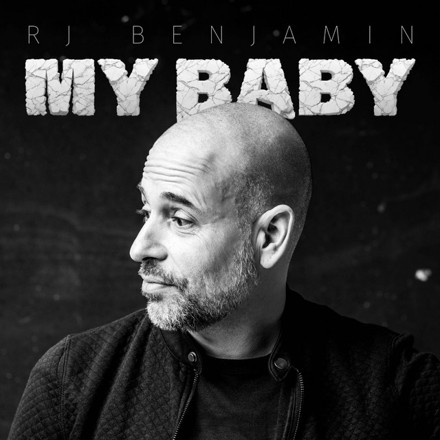
There is a particular difficulty that arrives when a musician has been doing this for a long time.
It is not learning how to make more music.
It is learning what no longer needs to be proved.
RJ Benjamin has spent more than two decades in and around the machinery of South African music.
Singer, songwriter, producer, teacher, vocal coach, musical director.
He has occupied enough rooms to know what happens in them before the first microphone is switched on.
That matters when listening to My Baby.
Because this is not a record made by somebody trying to convince us that he knows how music works.
He knows.
The more interesting question is what a musician does after knowing.
The long way to simple
Benjamin graduated from the Allenby Campus School of Contemporary Music in 2000 and soon found himself teaching as well as making records.
Who I Am arrived in 2004, carrying neo-soul, funk and jazz in a South African voice at a time when fitting neatly into any one of those categories was already complicated.
Swimming In The Soul Of Music followed in 2008 and won the Metro FM Award for Best R&B Album.
A year later, Change The World pushed him into another room entirely, onto South African dance floors, eventually attracting Channel O and SAMA nominations.
Then came the other life inside the life.
Teaching singers.
Developing voices.
Producing.
Musical direction.
Clash of the Choirs.
Idols SA.
The Voice.
Years spent being the person who hears what another singer cannot yet hear in themselves.
There is something peculiar about that existence.
If you spend long enough teaching people how to sing, you eventually have to return to your own voice and decide what remains when all the instruction is removed.
My Baby feels, to me, much closer to that question than to the language of a comeback.
Musica
I should say where I am standing.
I have listened to RJ Benjamin for a long time.
The beginning was not profound.
It was Musica.
A friend and I were standing in one of those record stores we once assumed would always be there.
She mentioned, almost casually, that she knew him.
I bought Swimming In The Soul Of Music that afternoon.
Partly because I was curious.
Partly because I wanted to impress her.
There are worse reasons to discover a record.
The attempt at impressing somebody disappeared into the ordinary graveyard where those things go.
The music kept.
Years later I met RJ once, while he was working as musical director on Idols South Africa.
I remember someone quieter than the accumulated titles might suggest.
Comfortable inside music.
Measured outside it.
I recognised something in that.
That is the extent of my personal claim here.
One meeting.
One record store.
And many years of listening.
What happens when the chase is over?
Popular music has an enormous vocabulary for desire and a surprisingly small one for contentment.
We know how to write the chase.
We know how to write lust, heartbreak, betrayal, seduction, loneliness, obsession and the magnificent stupidity that accompanies all of them.
Staying is harder to write.
Marriage resists easy drama.
Children rearrange the vocabulary.
Ordinary devotion rarely arrives with a chorus attached.
There is no dramatic bridge section when somebody packs school lunches.
No screaming modulation for making it through another year together.
Yet those things eventually become the substance of a life.
This is where the title My Baby becomes more interesting than it first appears.
“Baby” may be the most exhausted word in popular songwriting.
Thousands of records have asked it to do almost no work at all.
But age changes words.
A young man says “my baby” and we know roughly where popular music has trained us to look.
A husband and father says it and the room becomes less certain.
Lover.
Wife.
Child.
Home.
Perhaps all of them somewhere inside the same two words.
That ambiguity matters particularly in Benjamin's writing because this is not the first time his work has moved towards the domestic.
In 2023 he released Yonela, a song born while his wife Chantal was pregnant with their first child.
Benjamin initially believed the song was about the child.
He has spoken openly about trying, unsuccessfully, to force the lyric into that idea.
Then he sat down with songwriter William Wolf.
The song changed.
Or perhaps Benjamin finally heard what it had been saying.
The subject was his wife.
The courtship.
The proposal.
The life that had grown around them.
Benjamin later described how relinquishing the story he thought he was supposed to write allowed the actual story to emerge.
That history makes Wolf's return as co-writer on My Baby worth noticing.
This is not simply another name in the credits.
There is already evidence of a writing relationship in which these two men have sat with a song long enough to discover that its first explanation was not necessarily its truth.
For a songwriter, that is intimate territory.
Listen to the restraint
My Baby is not revolutionary.
It does not need that compliment and I would not give it one simply because I respect the man who made it.
There are places where familiarity works for the song and places where it limits it.
That distinction matters.
The record feels fresh, but it does not feel dangerous.
It does not arrive intent on dragging RJ Benjamin into some completely unfamiliar musical language.
There is enough recognisable craft here to remind you who is singing.
For some listeners, that will be exactly its virtue.
For me, it is also where part of the missing half-star lives.
I would have enjoyed one moment where the song surprised even the musician making it.
A harmonic decision, an arrangement turn, a little abrasion somewhere against all that competence.
Something slightly less polite.
But there is another argument.
Musicians spend their youth adding things.
More notes.
More parts.
More range.
More evidence.
Eventually, if we stay at it long enough, the work often becomes subtraction.
Can the melody survive without being decorated?
Can a vocal communicate without announcing the size of the instrument?
Can a song be allowed to remain a song?
That kind of restraint is easy to mistake for simplicity.
It is not always the same thing.
The people in the room
Benjamin publicly thanked Luis The Don, Chantal Stanfield, Anslin G, Lungelo Ngcobo, Al Dirty and Mr Ray Green for contributing to the record, alongside co-writer William Wolf.
He described My Baby as an “appetizer” and promised more music over the coming twelve months.
I like that he named them.
Music has become strangely committed to the mythology of the solitary creator when nearly every serious record I have ever known was touched by a roomful of people.
Someone played the thing you could not play.
Someone heard the harmony.
Someone found the word.
Someone said the second verse was lying.
Someone made coffee.
Someone sat silently until everybody else finally heard what was wrong.
Records remember these people even when publicity photographs do not.
RJ appears to understand this.
He has spent too much of his life helping other musicians become better to pretend otherwise.
About freedom
There is a tendency to romanticise the independent artist.
From the outside, independence can look like freedom from interference.
From the inside, it is mostly responsibility.
It has metadata.
Publishing splits.
Invoices.
Release dates, registrations, artwork, masters, distribution, marketing decisions and a dashboard somewhere quietly turning human attention into percentages.
Anyone who has worked independently for long enough knows the distance between making a song and getting that song safely into the world.
Freedom is not a state.
It is a workload.
Benjamin has lived across those structures for years, so My Baby does not read as some sudden declaration of independence.
What feels more important is agency.
At this stage of a career, the question is no longer simply whether you are allowed to make another record.
It is why this record.
Why now.
Why these people.
Why these words.
A diary with music underneath it
Years ago, Benjamin described his songwriting simply:
“My diary is my songbook.”
That sentence has aged well.
Because diaries change as people do.
At twenty-five, the page records one kind of emergency.
At forty-something, another.
The great mistake we make with mature artists is expecting them continually to reproduce the urgency of the person they used to be.
But perhaps survival is allowed its own music.
Perhaps stability is not the absence of a story.
Perhaps getting older does not mean becoming less hungry.
Perhaps it means becoming more particular about what deserves your hunger.
That is what I find most interesting about My Baby.
Not whether RJ Benjamin can still sing.
That question borders on insulting.
Not whether he can still write.
The catalogue settled that argument years ago.
I am interested in what he considers worth writing about now.
And in a career that has travelled through soul, jazz, funk, R&B, house, television, teaching, production and the voices of countless other performers, there is something quietly satisfying about returning to two of the oldest words in popular music.
My Baby.
Nothing clever about them.
Nothing left to hide behind either.
The appetite
Benjamin has called this an appetizer.
Good.
Then I am going to judge it like one.
An appetizer should not leave you finished.
It should sharpen something.
Three and a half stars from Bronze Street means the record has done enough to earn attention and left enough unresolved to keep the conversation alive.
Strong.
Musically assured.
Worth hearing.
Not flawless.
Not a reinvention.
More importantly, not pretending to be.
What it accomplishes is more useful.
It makes me curious about the next record.
And the one after that.
I do not particularly want RJ Benjamin to prove that he can still make the records he made twenty years ago.
Those records already exist.
I want to hear what twenty additional years have done to the man making them.
The spaces.
The restraint.
The things he no longer needs.
The things he discovered he cannot live without.
If My Baby is the appetizer, the real question is not whether RJ Benjamin still has an appetite.
It is what he is hungry enough to say next.
Bronze Street Verdict
My Baby does not need the language of return at all.
It is a mature, assured record that trusts economy over spectacle.
Its strongest quality is restraint.
Its limitation may be the same thing.
I still want one moment where Benjamin disturbs the surface and shows us something we have not heard from him before.
That tension is why it earns 3.5 out of 5.
Not because the work feels unfinished.
Because the conversation does.
If this is the first taste of the next twelve months, it has done what an appetizer should do.
It has made the next song matter.
— Bronze Street